
Need water tank installation in Pretoria?
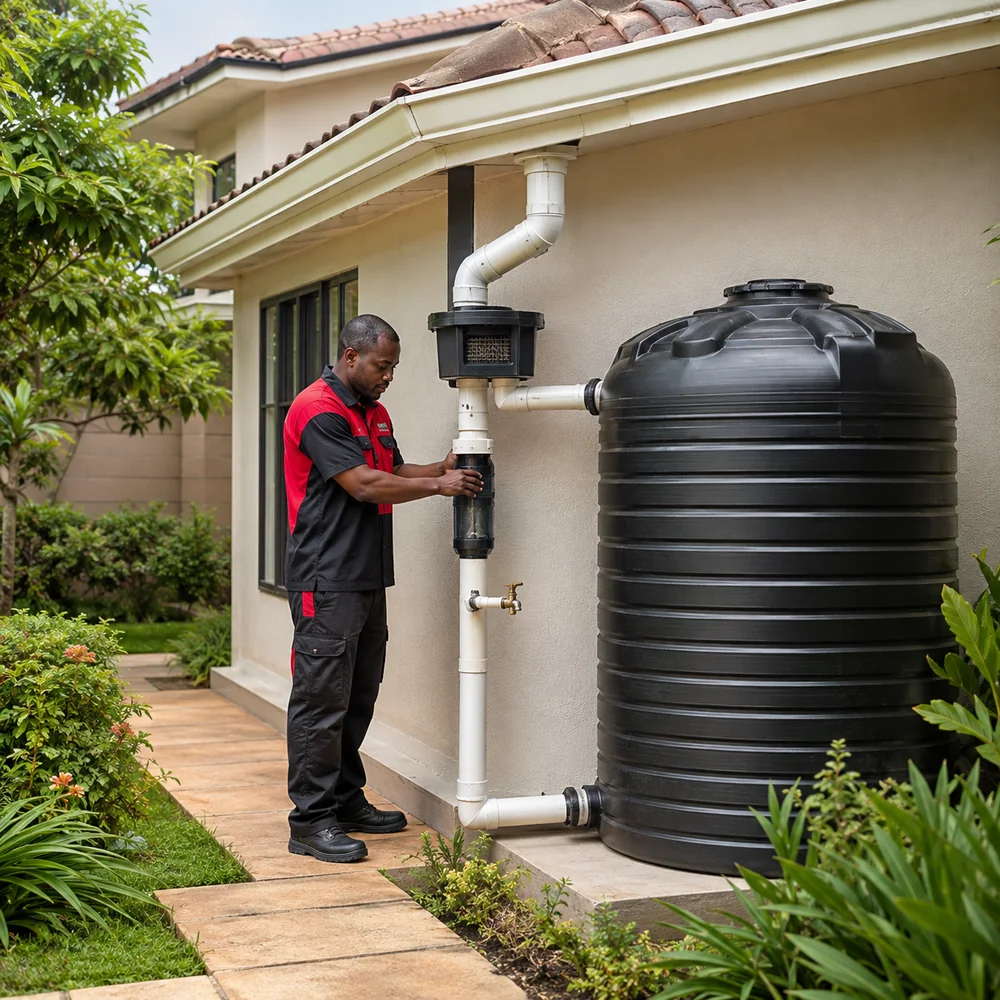
Turn suitable roof runoff into a useful alternative water source. We plan rainwater harvesting systems for Pretoria properties, bringing gutters, debris control, first-flush equipment, storage, overflow, pumps and filtration into one workable setup.
Need Water Tank Help?
Request a Call Back

PROBLEMS WE SOLVE
Collecting water effectively takes more than placing a tank below a downpipe. Roof conditions, dirty first runoff, overflow and delivery all affect how useful the stored water will be.
Roof water can bypass storage when gutters and downpipes are poorly routed. We review the catchment path and practical tank position.
Leaves, dust and the first dirty roof runoff can reduce water quality. Suitable screens and first-flush control help manage contamination.
A full tank still needs controlled overflow. We plan where excess water can discharge without creating avoidable erosion or damp problems.
The tank needs suitable delivery equipment for the intended garden, cleaning or household uses. Pumping and filtration are matched to the scope.
OUR APPROACH
We begin with the catchment surface and intended use, then work through conveyance, storage and delivery. This prevents the tank from being treated as an isolated component.
WHY CHOOSE US
We help Pretoria property owners collect and use rainwater without making unsafe assumptions about water quality. The system is planned around local rainfall patterns, available roof area, storage space and the intended application.

RECENT WORK
These completed projects show how roof area, gutter condition, storage position and intended water use shaped practical rainwater systems in Pretoria suburbs.
A Moreleta Park homeowner wanted to reduce municipal water use in an established garden. We inspected the roof catchment, gutter falls, downpipe positions and the available space beside the garage. Leaf screening and first-flush control were added before the selected downpipe entered the tank, and the overflow was routed away from the foundations. A pump and filtered outlet were connected for irrigation use. After testing the inlet flow, overflow path and pump delivery, the system captured suitable roof runoff and provided a convenient stored supply for routine garden watering.
A sloped Waterkloof Ridge property had several downpipes discharging onto paving while the proposed tank position sat lower on the stand. We traced the most useful roof-water route, checked pipe gradients and excluded sections that could not drain reliably. The selected downpipes were combined through screened inlets, with a first-flush device and a visible overflow route to manage heavy rainfall. The tank outlet was connected to a pump serving designated outdoor taps. Flow testing confirmed that water reached the tank without backing up at the gutters, giving the property a controlled collection system.
An Akasia workshop wanted captured roof water for yard cleaning and landscape maintenance. The large roof offered useful collection potential, but leaves and windblown debris were entering the gutters. We cleaned and assessed the collection route, installed debris screening and directed the most productive downpipes to dedicated storage. A serviceable filter, isolation valves and a pump were added for the approved non-potable outlets, while overflow was taken to a suitable drainage point. Commissioning confirmed consistent pump delivery and easy access to the filter, giving staff a practical alternative supply for routine outdoor tasks.
At an Irene home, an existing rainwater tank filled slowly even after substantial rainfall. We inspected the gutters and found poor falls, leaking joints and a downpipe connection that allowed much of the runoff to bypass the inlet. The affected gutter sections were corrected, joints were sealed and the tank inlet was rebuilt with a screened collector and first-flush control. Overflow direction and the garden pump connection were also checked. A controlled water test confirmed improved flow into the tank and clean discharge at the overflow, restoring useful collection from the available roof area.
RELATED SERVICES
Rainwater harvesting often overlaps with tank installation, backup planning and efficient water use. These services help complete the right system for your property.
Install practical storage, pumping and connections around the property.
Configure a JoJo tank as part of a complete collection system.
Prepare stored supply for periods of municipal interruption.
Use collected and stored water more purposefully.
View all 911 Water Tanks services or request help with your property.
HELPFUL WATER GUIDANCE
The Water Research Commission’s rainwater harvesting resource guidelines explain that catchment surfaces, first-flush control, storage, pumps, filtration and treatment all influence the final water quality. We use this risk-based principle and do not present untreated harvested water as automatically suitable for drinking.
RAINWATER HARVESTING FAQS
What to consider before collecting, storing and using rainwater at your property.
Potential yield depends on roof area, rainfall, surface type and collection losses. We assess the practical catchment before recommending storage capacity.
It diverts the initial roof runoff, which can carry dust and debris, before cleaner later runoff enters the storage tank.
Some uses may be possible with suitable system separation, filtration and treatment. The design must match the specific use and applicable requirements.
A planned overflow route carries excess water away from the tank and sensitive structures towards a suitable discharge point.
Check them regularly and after heavy debris or storms. The exact maintenance interval depends on surrounding trees, roof conditions and the equipment used.