
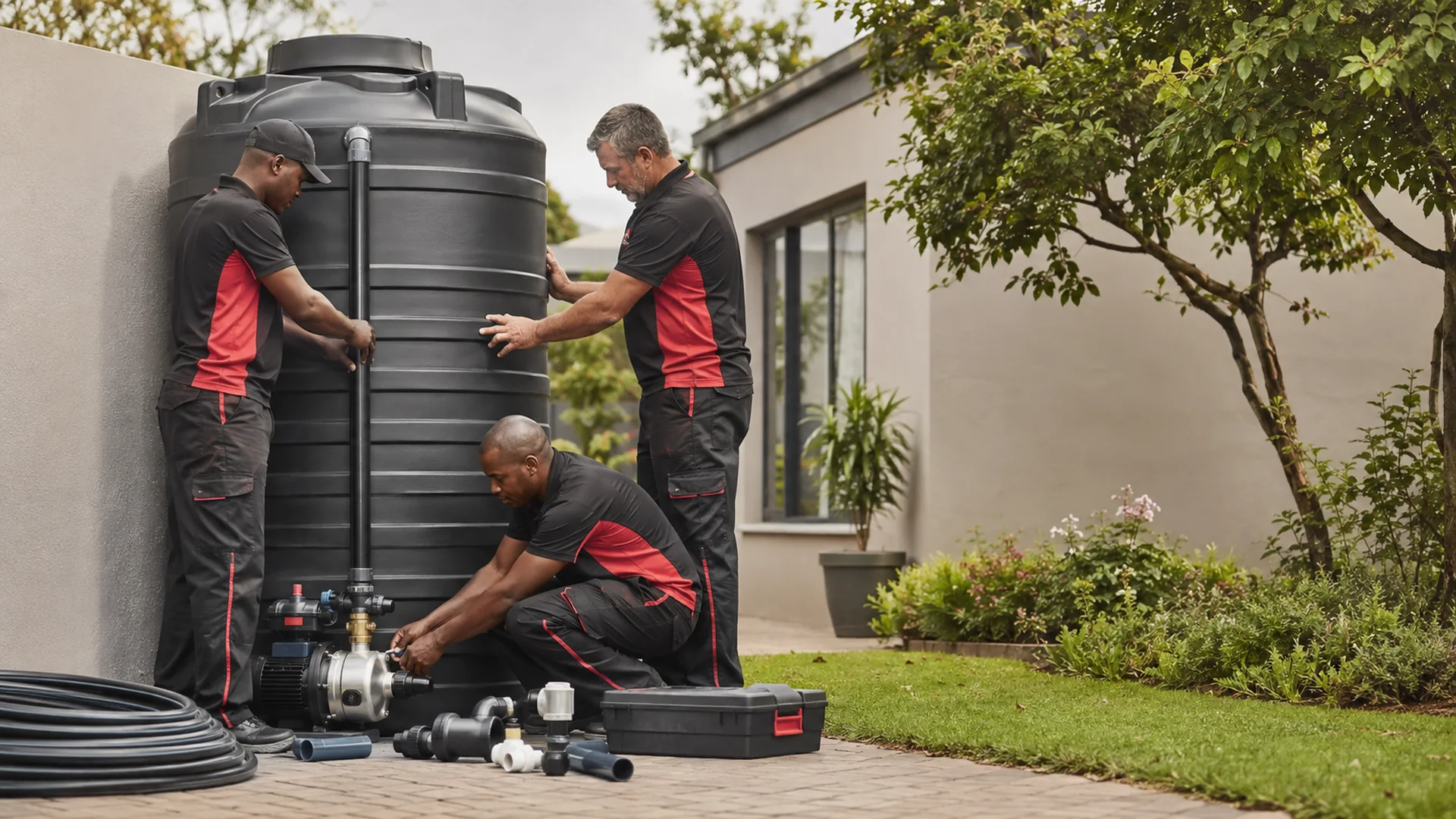
Rainwater harvesting can turn roof runoff into useful stored water, but the tank is only one part of the system. Good results depend on how water is collected, how early debris is managed, where overflow goes and what the stored water will be used for.
Review the Roof Catchment
The roof area, surface material and gutter layout affect the volume and quality of water reaching the tank. Broken gutters, poorly positioned downpipes and heavy leaf fall can reduce collection or send excessive debris into the system.
Before choosing storage capacity, follow the runoff path from the roof to the proposed tank position. This shows whether downpipes can be combined and whether the route can maintain suitable falls.
Control Leaves and the First Dirty Runoff
Roof surfaces collect dust, leaves, bird droppings and other debris between rainfall events. Leaf screens and suitable inlet protection reduce larger material. A first-flush device diverts the initial runoff so it does not enter the main storage volume.
These components need accessible positions because they require cleaning. Hiding them behind fixed structures can make routine maintenance difficult.
Give Overflow a Safe Destination
When the tank is full, new rainfall must leave through a controlled overflow. The discharge point should not create erosion, damp problems or nuisance water near foundations and boundaries. Where possible, overflow can follow an approved stormwater route or another suitable managed outlet.
Define the Intended Water Use
Garden irrigation, outdoor cleaning and other non-potable uses often have different treatment requirements from indoor or drinking-water applications. The source, catchment surface, storage conditions and exposure risk all matter.
The Water Research Commission’s South African rainwater harvesting guidelines describe catchment, first-flush control, storage, pumps, filtration and treatment as connected parts of a complete system. Untreated harvested water should not be assumed to be safe for drinking.
Choose Storage and Delivery Equipment
The practical tank size depends on roof yield, available space and expected use. If water must reach pressurised outlets, the pump and controls need to match the required duty. Filters should be selected for the water source and purpose, with room left for inspection and replacement.
Plan for Maintenance
Gutters, screens, first-flush equipment, tank inlets, overflow routes and filters all need regular checks. Maintenance frequency depends on surrounding trees, roof conditions and how often the system operates.
For a property-specific plan, explore our rainwater harvesting services in Pretoria and share photos of your roof-water routes and proposed storage area.