
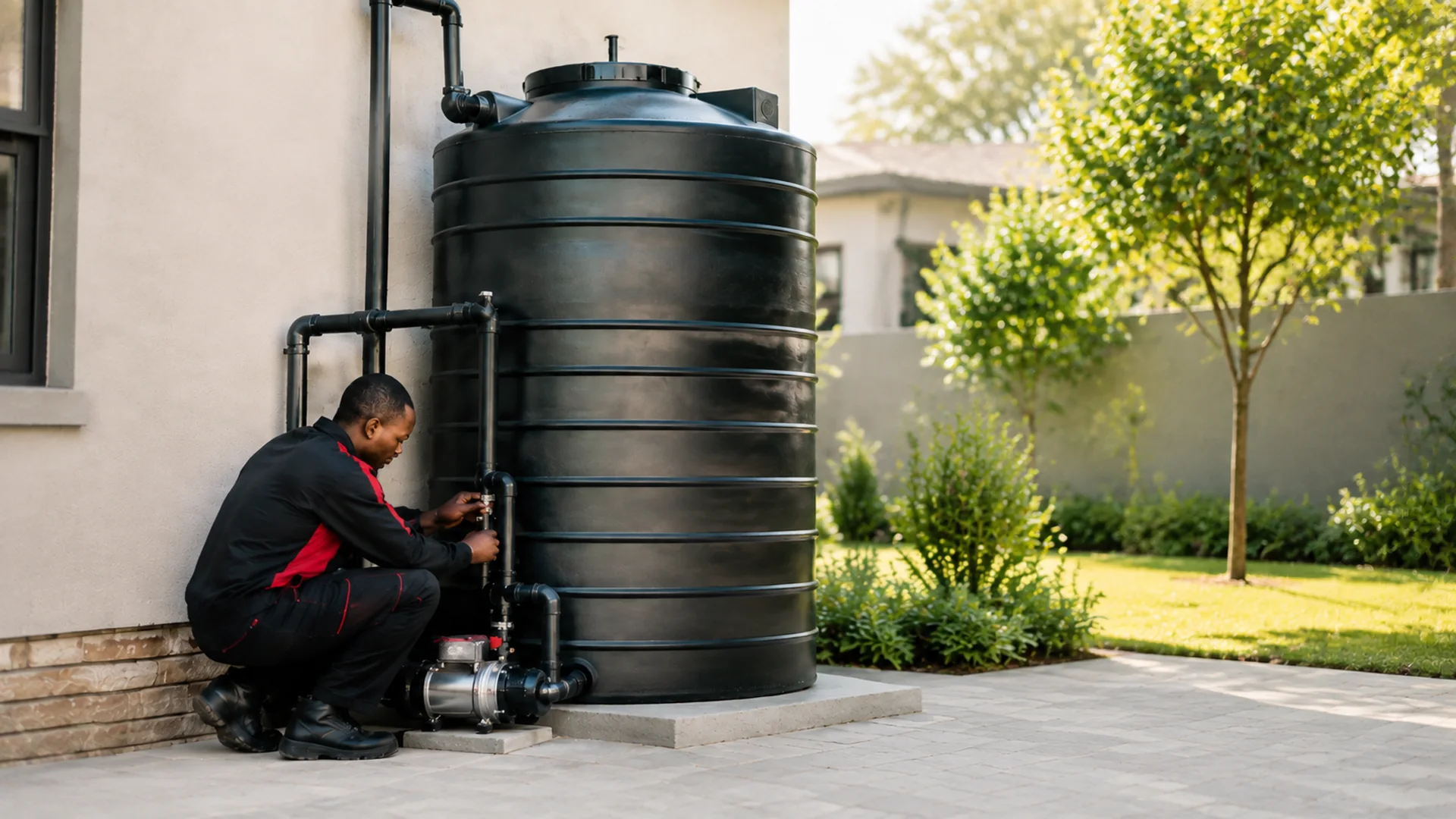
Choosing a water tank by price or capacity alone can leave you with storage that does not fit the property or support the outlets you care about. A useful decision starts with how much water you need, where the tank can stand and how the stored supply will reach its destination.
Start With the Water You Actually Need
Think about the reason for the tank. Is it meant to cover essential household use during a municipal interruption, provide water for a garden, support cleaning, or form part of a rainwater harvesting system? Each purpose creates a different demand pattern.
List the outlets that matter most and estimate how often they are used. A backup system serving selected toilets and taps has a different requirement from one expected to support unrestricted household use. Being specific helps prevent unrealistic expectations.
Measure the Available Installation Area
Capacity must fit the actual footprint. Measure the width, depth and height available, then consider the delivery route to that position. Narrow gates, roof overhangs, boundary walls, paving and estate rules can all influence the tank shape and final location.
Leave space for valves, filters, pumps and future service access. A tank that physically fits but blocks routine maintenance is not a practical choice.
Remember the Full Operating Weight
Water is heavy. The supporting base needs to be stable, level and suitable for the full tank, not only the empty shell. Existing paving or soil conditions may need assessment before installation. The tank manufacturer and installer should confirm the base requirements for the selected model.
Match Capacity to Refill Conditions
A municipal backup tank may refill whenever supply returns, while a rainwater tank depends on roof area and rainfall. That difference affects how often the stored volume can be replenished. Larger is not always better if the catchment cannot refill the tank or the water sits unused for long periods.
Plan the Pump and Outlets Together
If the tank must supply pressurised outlets, the pump needs to suit the required flow, pressure and pipe route. The number of outlets, elevation changes and control method all matter. Choosing the pump after the tank has been placed can create awkward connections and poor service access.
What to Share With an Installer
- The property address and suburb
- The intended water source and uses
- Photos and measurements of the proposed tank area
- The outlets you want the system to supply
- Any access, estate or electrical restrictions
A clear brief makes it easier to compare suitable options. If you need help planning the complete setup, view our water tank installations in Pretoria or contact 911 Water Tanks with your property details.