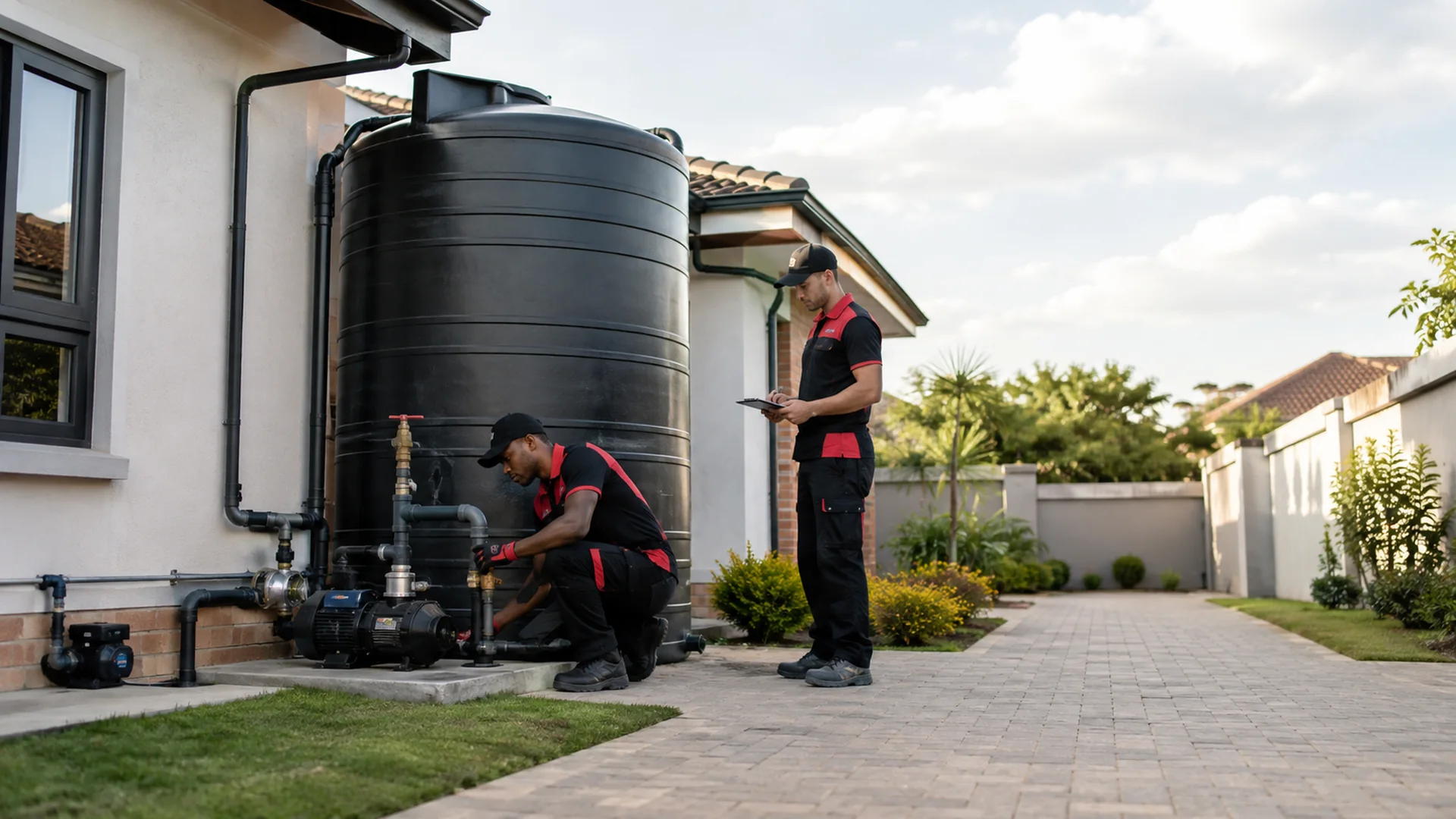
A backup water tank can hold enough water and still disappoint if the pump, controls and connected outlets were not planned properly. Reliable backup starts by defining essential demand and then matching every component to that purpose.
Decide Which Outlets Are Essential
Whole-property backup can use water quickly. Many homes and businesses get better value by prioritising selected toilets, taps or operational needs. List what must continue during an interruption and what can wait until municipal supply returns.
This list helps estimate capacity and prevents the system from being judged against an undefined expectation.
Estimate a Realistic Storage Duration
The same tank can last very different lengths of time in two properties. Occupancy, business activity, toilet use, cleaning and irrigation all affect demand. Capacity should be discussed in terms of expected daily use, not only litres on the product label.
Match the Pump to the Required Duty
The pump needs to provide enough flow and pressure for the connected outlets without excessive cycling. Pipe diameter, route length, elevation and the number of simultaneous outlets all influence performance. Bigger is not automatically better, because an oversized pump can introduce other operating issues.
Use Clear Controls and Isolation Valves
Users should understand when the property is drawing from stored water and how the system refills. Accessible isolation valves make maintenance safer and help separate parts of the system when a fault needs attention. Labels are useful where several valves sit close together.
Account for Electricity
Most pressure pumps require power. If the backup system must operate during an electrical outage, that requirement needs a separately planned power solution. A full tank does not guarantee pressurised water when the pump cannot run.
Keep Water Quality in Scope
Municipal water stored in a suitable tank presents different considerations from harvested rainwater or another source. Filtration, treatment and system separation must match the intended use. Do not assume any stored source is suitable for drinking without the required assessment and treatment.
Check the System Before You Need It
Routine checks should cover tank level, visible leaks, pump behaviour, filters, valves and the refill control. Testing the connected outlets before a supply interruption helps reveal faults while there is still time to address them.
Need a practical continuity plan? Read about our backup water storage systems in Pretoria or contact 911 Water Tanks with your essential outlets, available space and preferred storage duration.